


Overview of How To Clean Indian Sandstone Paving Safely And Effectively
Indian sandstone paving brings natural warmth and character to any outdoor space. Like all paving, it needs occasional cleaning to stay looking its best, especially in the face of the British weather. In this guide, we’ll show you how to clean sandstone paving using safe, effective methods that protect the stone and restore its appearance.

Table of Contents
Key Points
- Indian sandstone is durable but porous, so it benefits from gentle, non-acidic cleaning methods and occasional maintenance
- Warm water with mild washing-up liquid is usually enough for regular cleaning, while stone-safe cleaners can help with heavier staining
- Always use non-metal, stiff-bristled brushes and avoid vinegar, brick acid or any acidic products that can damage the stone
- Pressure washing is safe when done carefully at low pressure and at a distance to avoid surface erosion or dislodging jointing
- Moss, algae and black spots can be removed with diluted bleach or stone-safe treatments, followed by thorough rinsing
- Avoid common mistakes like letting bleach dry on the surface, skipping patch tests, or forgetting to replace jointing sand after cleaning
What Tools And Materials Do You Need To Clean Sandstone?
The best way to clean Indian sandstone starts with your tools. The right tools make sandstone cleaning much easier and help protect the stone from accidental damage. Whether you’re giving your patio a quick refresh or tackling some long-term grime, here’s what you’ll want nearby.
Essential tools:
- A stiff-bristled outdoor brush (avoid wire brushes, they can scratch the surface)
- Garden hose or pressure washer with adjustable settings
- Bucket or watering can
- Protective gloves and old clothes (especially if you’re using bleach)
Cleaning materials:
- Warm water
- Washing-up liquid (acid-free)
- Optional: diluted bleach for moss and algae
- Optional: stone-specific patio cleaner
- Optional: baking soda for stubborn marks
If you’re just cleaning a small patch, you won’t need anything fancy, a bucket and a bit of elbow grease will do the job. For larger patios, using a hose or pressure washer on a low setting can help you cover more ground quickly.
Step-By-Step: How To Clean Sandstone Paving
Cleaning sandstone paving isn’t complicated, but taking your time with each step helps you get the best results. If you want to clean sandstone patio areas without causing damage, it’s important to use the right tools and a gentle approach. Follow this easy process to clean your paving safely and effectively.
1. Sweep And Remove Debris
Start by moving garden furniture, pots or anything else off the patio. Use a stiff broom to sweep away leaves, dirt, and loose debris. If weeds are growing between the joints, scrape them out with a hoe or patio knife to avoid staining later.
2. Pre-Wet The Surface
Dampen the sandstone with clean water using a hose or watering can. This stops the cleaning mix from soaking in too quickly and helps it spread evenly. It’s a quick step that reduces the risk of patchy results.
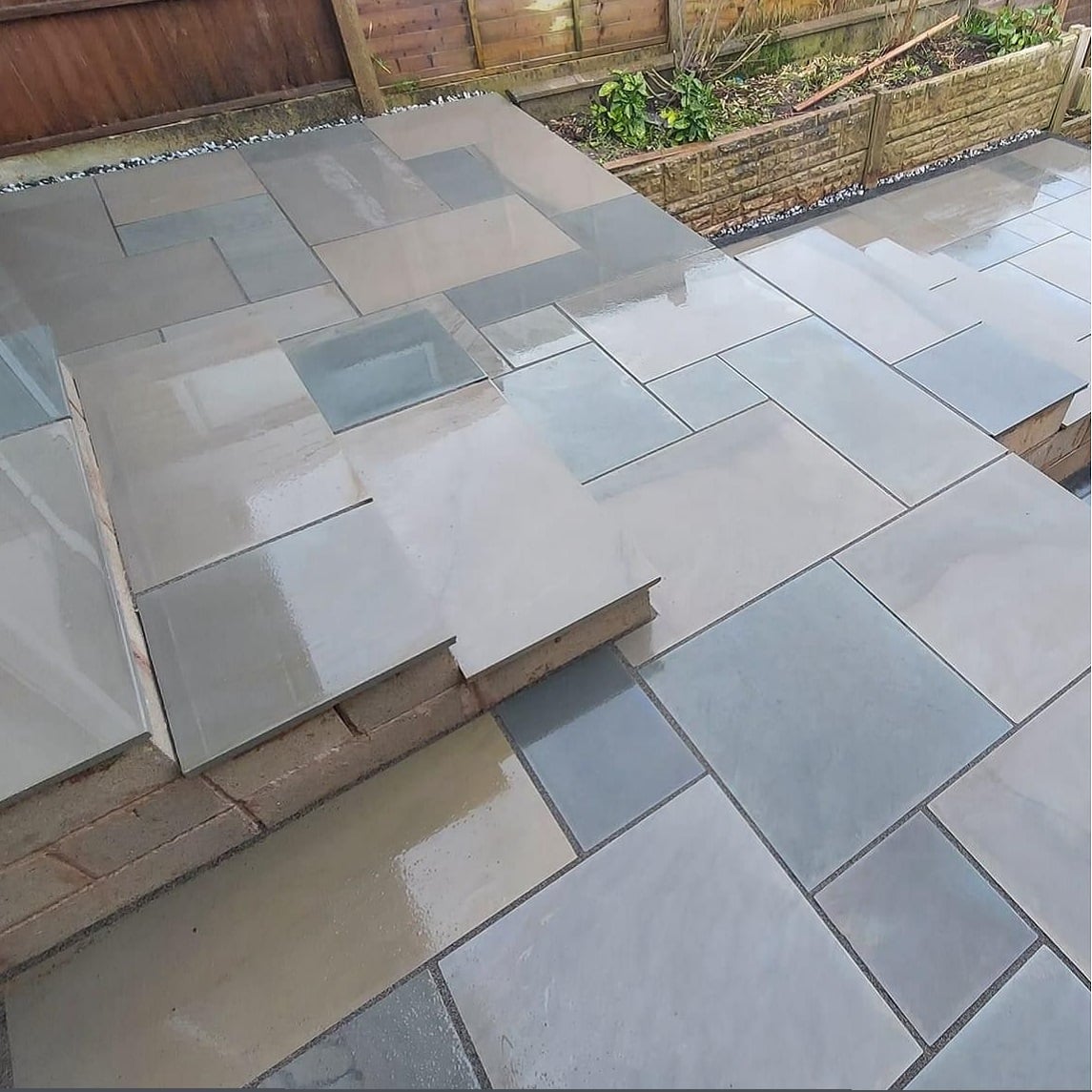
3. Apply Your Cleaning Solution
Mix warm water with a few drops of acid-free washing-up liquid in a bucket. Pour it across the surface or apply with a sponge or watering can, focusing on stained areas. For general maintenance, this mild solution works well, but you can also use a sandstone patio cleaner if the grime is more stubborn.
4. Scrub With A Stiff Brush
Use a stiff-bristled (non-metal) brush to scrub in small, circular motions. You’re aiming to lift the dirt, not grind it into the stone. Let the solution sit for a few minutes on tougher spots before scrubbing again.
5. Rinse Thoroughly With Clean Water
Rinse the patio using a hose or pressure washer set to low. Make sure all the soap is washed away, leftover residue can attract more dirt or leave dull patches. If it still looks a little murky, give it time to fully dry before judging the result.
6. Let It Dry Fully Before Use
Leave the area to dry completely for a few hours. On a warm day, it should be ready by evening. Wait until it’s dry before putting furniture back or walking over it regularly.
Why Does Sandstone Become Stained Or Discolored?
It’s completely normal for sandstone to lose its original look over time, especially with the unpredictable UK weather. The stone is porous, so it naturally absorbs moisture and dirt from its surroundings, which can lead to staining.
Common causes of discolouration include:
- Algae and moss forming in shaded or damp spots
- Leaf litter and bird droppings left to sit too long
- Wear patterns from foot traffic and garden furniture
- Standing water creating dark patches or water marks
- Acidic or harsh cleaning products that cause rust or fading
If your patio is under trees or in a shaded area, you’ll probably need to clean it more often than one in full sun. Regular maintenance helps keep the colour consistent and prevents deep stains from setting in.
What Is The Safest Way To Clean Sandstone Paving?
Although sandstone is durable, it can be damaged by the wrong cleaning methods. The safest way to clean sandstone is by using gentle, non-acidic solutions that lift dirt without harming the stone. Understanding how to clean patio slabs in general can give you a solid foundation, but sandstone requires a bit more care to avoid damage.
Use Warm Soapy Water Or Ph-Neutral Patio Cleaner
Warm soapy water is often the best way to clean sandstone without causing damage. Use a mild washing-up liquid, avoid anything citrus-scented or acid-based. If you need something stronger, choose a patio cleaner that’s clearly marked safe for natural stone.
Test A Small Area Before Cleaning Fully
Always start by testing your cleaning mix on a hidden spot. Leave it for 10 to 15 minutes, rinse it off, and check for any changes in colour or texture. This simple test can prevent accidental damage to the rest of your patio.
Avoid Acid-Based Products Like Brick Acid
Acidic cleaners can eat into the stone, causing rust marks, pitting, or fading. That includes household items like vinegar, lemon juice, or brick acid. Stick to neutral or alkaline cleaners specifically designed for cleaning sandstone patio areas.
Can You Pressure Wash Sandstone Without Damaging It?
Yes, you can pressure wash sandstone, but only if you do it carefully. Done incorrectly, it can damage the surface or wash out the joints. If you’re not confident with your technique, a gentler method might be the better choice.
How To Use A Pressure Washer Correctly
Start by setting your washer to under 1500 psi and use a wide-angle nozzle. Keep the nozzle about 30 cm away from the surface and spray diagonally across the slabs at a 45-degree angle. Always test on a small, hidden patch first to make sure the pressure isn’t too harsh.
Risks Of Damage From High Pressure
Using too much pressure can lead to:
- Chipped or eroded sandstone
- Water forced into the stone’s pores, causing cracks in winter
- Sand washed out from between the joints
If you notice the jointing sand shifting or pale streaks forming, your pressure is too high. In that case, ease off and consider switching to manual cleaning.
Alternatives To Pressure Washing
If you’re unsure about using a pressure washer, these safer options still work well:
- Soapy water and scrubbing, as covered earlier
- Diluted bleach, applied for 15-30 minutes then rinsed
- Baking soda paste, left overnight and gently scrubbed off
These methods might take a bit more effort, but they’re much less likely to damage your paving slabs, especially if they’re older or more porous.
How To Remove Moss, Algae And Black Spots From Sandstone
Moss, algae and black spots are common on sandstone patios, especially in shady, damp corners of the garden. If left too long, they can make the surface slippery, unattractive, and harder to clean later. Thankfully, there are a few effective ways to deal with them.
To remove them:
- Pre-wet the surface with clean water
- Mix 1 part bleach to 1 part water
- Pour over affected areas and leave for 15–30 minutes
- Scrub with a stiff brush
- Rinse thoroughly with fresh water
If you’d rather not use bleach, a stone-safe black spot remover is a good alternative. You can also make a baking soda paste (just water and bicarb), apply it to the stain, and rinse after a few hours. For long-term results, consider sealing your Indian sandstone once it’s fully clean and dry.
Common Mistakes To Avoid When Cleaning Sandstone Paving
Even with the best intentions, it’s easy to go wrong when cleaning sandstone. The key is knowing what not to do, especially when using stronger tools or chemicals.
Avoid these common mistakes:
- Using vinegar, lemon juice or brick acid, all are too harsh
- Holding the pressure washer too close or setting it too high
- Skipping the patch test before applying a cleaner
- Letting bleach dry on the stone surface
- Scrubbing with metal brushes or scouring pads
- Forgetting to replace jointing sand after cleaning between paving slabs
If you’ve removed or disturbed the jointing during cleaning, it’s worth revisiting the basics of how to grout paving slabs to make sure your patio stays stable and weatherproof. Cleaning sandstone patio surfaces properly takes a little time and patience, but avoiding these pitfalls means your paving will stay in great shape for years to come.
FAQs (Frequently Asked Questions)
Can I use bleach on Indian sandstone?
Yes, you can use bleach on Indian sandstone, but only when it’s properly diluted with water. A 1:1 ratio of household bleach to water is usually safe for tackling moss, algae, or stubborn stains. Just be sure to pre-wet the area, rinse thoroughly after cleaning, and keep pets and plants out of the way.
What is the best patio cleaner for sandstone?
The best patio cleaner for sandstone is a pH-neutral product made specifically for natural stone. These are gentle on the surface but effective at lifting grime and stains. Avoid anything acidic, as it can damage the stone over time.
How often should sandstone be cleaned?
Sandstone paving should be cleaned at least twice a year to stay in good condition. Spring and autumn are ideal times, especially before and after the wetter months. A quick weekly sweep will also go a long way in preventing dirt and moss build-up.
Can I use vinegar or acid on sandstone?
No, vinegar and acidic cleaners should never be used on sandstone. They can corrode the surface, lead to discolouration, and shorten the life of your paving. It’s best to stick with mild soaps or products labelled safe for stone.
Is professional patio cleaning worth it?
Professional cleaning can be a smart choice if your paving is very dirty or if you’re not confident using pressure washers or strong solutions. Experts have the tools and know-how to clean effectively without damaging the stone. Still, with the right products and a little effort, many homeowners get great results doing it themselves.

Whether your patio is in need of a comprehensive clean or you're just aiming to refresh your outdoor space, this Read more

In all garden designs, steps serve more than just a practical purpose; they enhance the visual appeal of your outdoor Read more

Patio slab painting is becoming increasingly popular, with people painting paving slabs for various reasons, in particular, painting patio concrete Read more

Stopping weeds from growing between block paving is important because they can damage the surface and make the area look Read more
