


Overview of Sharp Sand vs Building Sand
As a whole, sand aggregates serve the purpose of providing a construction material that provides both strength and durability. These aggregates find application in various areas such as concrete, asphalt, and mortar. However, they are commonly used as a foundational material for all outdoor paving, block paving and cobble sett installation projects.
When selecting sand aggregates for a specific applications like garden paving projects, it is crucial to consider the properties that are essential for that particular use, like the required strength and durability. For instance, if strength is a priority, a fine aggregate should be the more favoured choice (Sharp Sand). On the other hand, if durability is of vital importance, a coarse aggregate would be the more suitable choice (Builders Sand).
In this article, we focus on the benefits of Sharp Sand vs Building Sand for laying paving slabs; each offering unique characteristics for specific outdoor paving installation projects, with Sharp Sand being the preferred option for paving projects.

Table of Contents


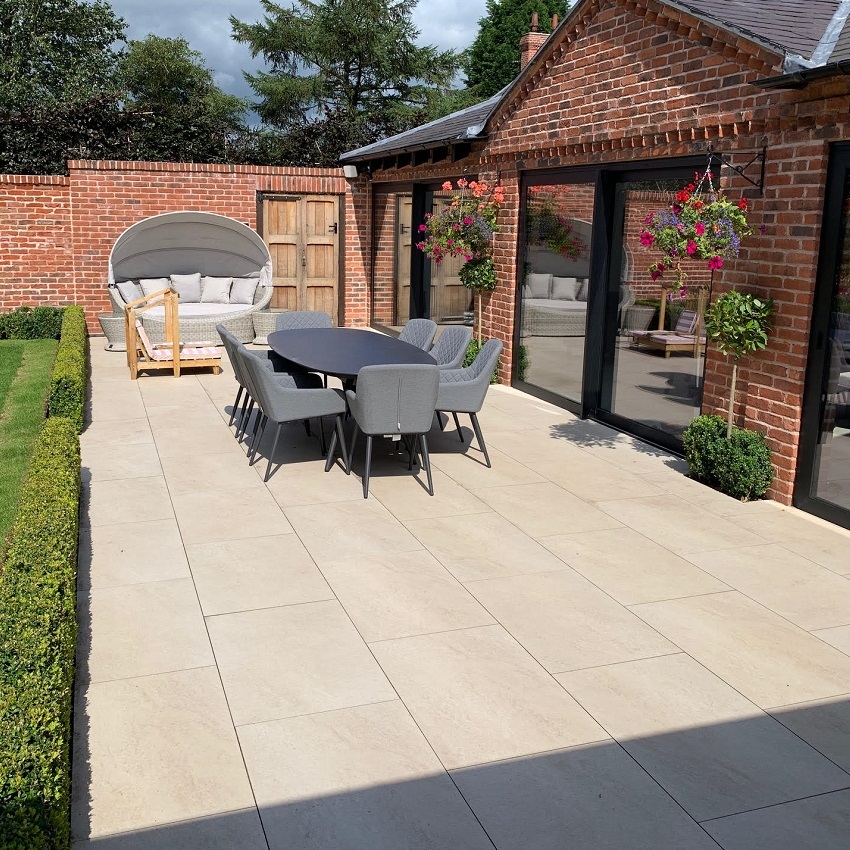
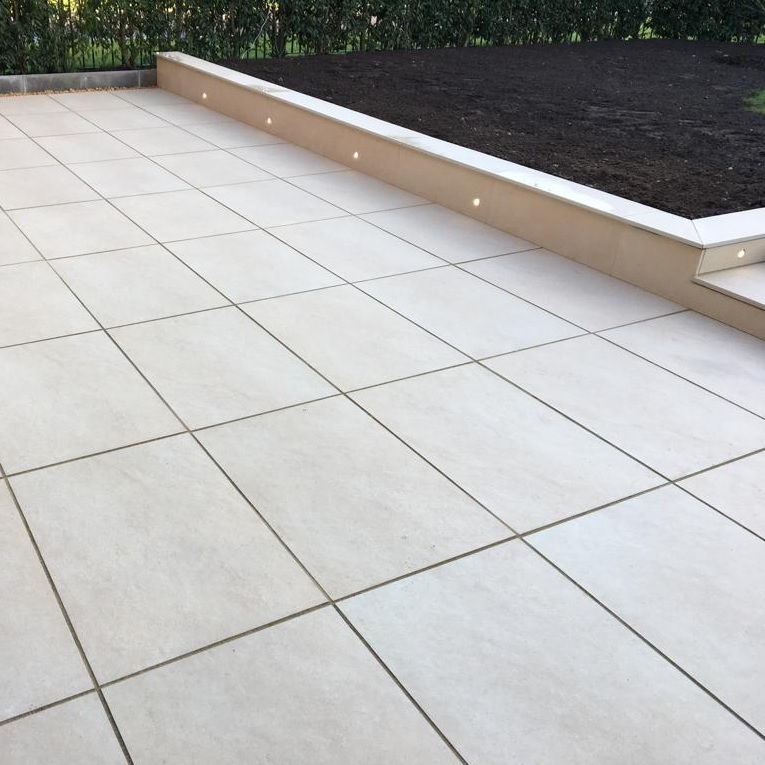


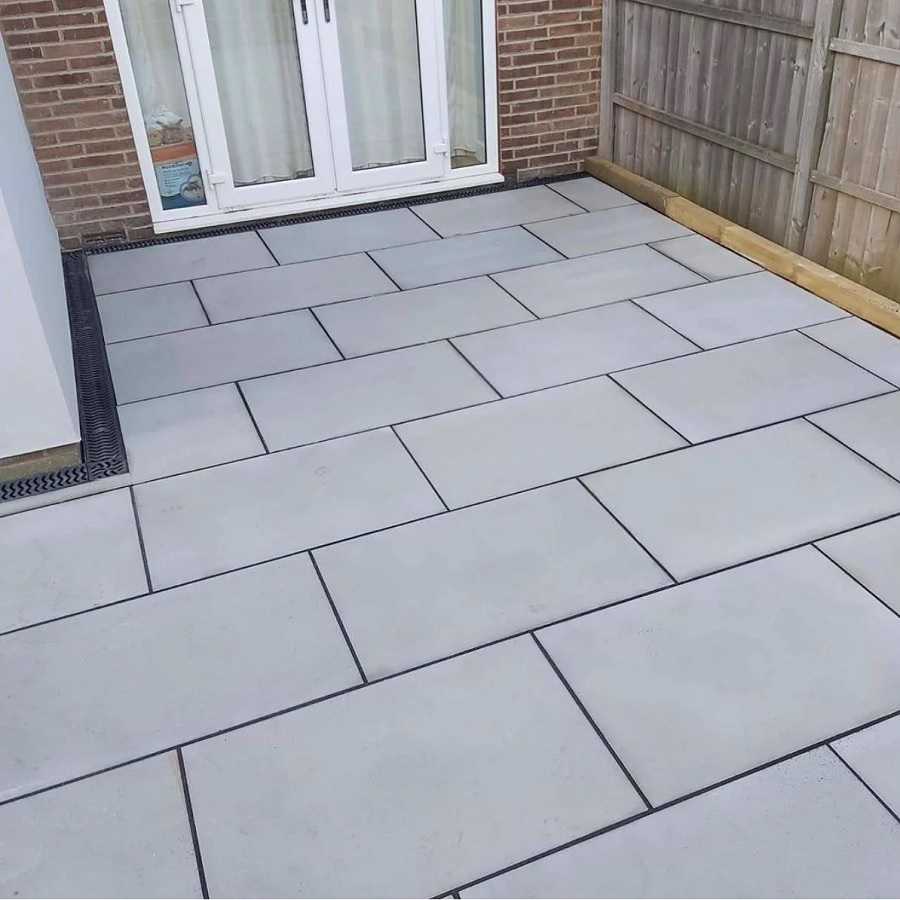


What is Sharp Sand?
Sharp sand, also referred to as grit sand and/or concrete sand; possesses a coarser texture and larger particles compared to other types of construction sands like builder’s sand, with particles ranging in size from 2mm to 5mm. It is typically sourced from local quarries and is characterised by its gritty texture and brownish colour. Sharp sand is often used in paving projects where strength and drainage are essential.
TOP TIP: Sharp sand has a larger grain size compared to other sand types, resulting in a slightly increased weight.
Can Sharp Sand be used for Paving Installation?
Sharp sand is most commonly used for paving projects that require strong, stable foundations, such as laying paving slabs or constructing paths. Its coarse texture provides excellent drainage properties, making it ideal for areas prone to water-logging or heavy rainfall. Sharp sand is also used as a key ingredient in concrete mixes, providing strength and durability to the final product.
However, sharp sand may not be suitable for tasks that require a smooth finish. Its coarse particles can result in a rough surface texture. It is also less workable than builders sand, making it more challenging to achieve precise results in applications such as bricklaying or rendering.

Sharp Sand
What is Building Sand?
Builders sand is a finely graded sand typically composed of particles that are smaller than 2mm in size. It is often light beige or yellowish in colour and has a smooth texture. Builders sand is sourced from natural deposits, such as quarries, and is commonly used in a variety of construction applications.
Can Builders Sand be used for Paving Installation?
Builders sand is ideal for tasks that require a smooth finish, such as bricklaying, rendering, and plastering. Its fine texture makes it easy to work with and provides good workability for mortar mixes. Builders sand can be used as a bedding material for paving slabs, however Sharp Sand is definitely the more suitable option for laying paving slabs.
Building sand is mainly employed by builders for mixing mortar to lay bricks, as its small grains create a reliable bonding material that does not shrink or crack once it has hardened.
Builders sand is not suitable for projects that require high levels of compaction or drainage, as its fine particles can lead to poor drainage and stability over time, hence why Sharp Sand is the preferred option for paving installation projects. Additionally, it may not provide sufficient strength for heavy-duty applications, such as laying foundations for paving or building retaining walls.

Building Sand
Conclusion: The Best Sand for Laying Paving Slabs
When it comes to laying slabs in your garden or outdoor space, both builders sand and sharp sand can be suitable options depending on your specific requirements. As a summary of the above, we recommend Sharp Sand for paving slab installation projects as it provides superior drainage and strength compared with Builder Sand.
Ultimately, the best sand for laying slabs will depend on factors such as the local climate, soil conditions, and the intended use of the paved area. It’s essential to assess your project’s needs carefully and choose the sand that best meets those requirements.
In conclusion, choosing the right type of sand for your garden paving project is essential for achieving the best results.
Additional Related Articles
How To Lay Patio Slabs?
How To Mix Cement?
FAQs (Frequently Asked Questions)
Where should I avoid using sharp sand?
The more coarse, angular grains in common sharp sand products mean that it is not suitable for the following applications:
- Bricklaying
- Pointing
- Applications that require mortar with a smooth texture
Where should I avoid using Builder Sand?
The texture and general make up of building sand makes it unsuitable for the following construction applications:
- Golf Bunkers
- Child play areas and sand pits
- Concrete mixing (unless combined with a gritty sand aggregate)
- Installing paving slabs or driveway blocks – its possible, but not recommended.
Can I use sharp sand for laying block paving?
Yes, sharp sand can be used for laying block paving. However, when laying bricks to build a wall for example, in some cases, it may not provide the smooth finish required. Builders sand is most commonly preferred for bricklaying, as its fine texture allows for better workability and adhesion in mortar mixes.
Can I use building sand for laying slabs?
Builders sand is more commonly used for bricklaying and cement mixes. However, for paving installation, it will work but its not something we would recommended. If you require superior drainage and strength, in areas prone to water-logging, sharp sand may be a better option to use when installing outdoor paving.

Whether your patio is in need of a comprehensive clean or you're just aiming to refresh your outdoor space, this Read more

In all garden designs, steps serve more than just a practical purpose; they enhance the visual appeal of your outdoor Read more

Patio slab painting is becoming increasingly popular, with people painting paving slabs for various reasons, in particular, painting patio concrete Read more

Stopping weeds from growing between block paving is important because they can damage the surface and make the area look Read more

