


Overview of How To Make Concrete
In this guide, we’ll provide a detailed overview of how to make concrete.
How do you make concrete? This is a common question for many DIY projects. If you’re about to start a construction or landscaping project, it’s useful to understand the fundamentals of making and mixing concrete; a blend of cement, sand, gravel, or other coarse materials combined with water. It’s important to note that cement is not the same as concrete; cement is an aggregate used in the creation of concrete.
This guide will explain everything to do with making Concrete, from choosing the right materials to mixing and achieving the ideal texture for your construction projects.

Table of Contents
Essential Tools & Materials
Its important to gather the correct tools and materials required before you start making the concrete mix; this ensures an efficient process and a good quality outcome.
Tools:
- Shovel
- Paddle Mixer
- Mixing Bucket
- Gloves
- Protective Mask
Materials & Aggregates:
- A bag of Cement (Store bought)
- Sand
- Gravel and/or Crushed Stone
- Water
Step-by-Step instructions for mixing Concrete
Follow these step-by-step instructions for mixing concrete, to ensure you have the correct consistency and the end product is fit for purpose.
STEP 1: Pour Sand, Gravel and/or Crushed Stone into a Mixing Bucket
- You should begin the concrete making process by combining Sand, Gravel and Crushed Stone into a large mixing bucket using the recommended mixing ratio.
- To ensure a good consistency for the majority of projects, its recommended to use a standard mix ratio of two parts sand, four parts gravel and/or crushed stone, and one part cement.
Top Tip:
If you require a stronger cement mix, you’ll want to add more sand/gravel and use less water; ideal for use in building and bridge construction for added strength and durability.
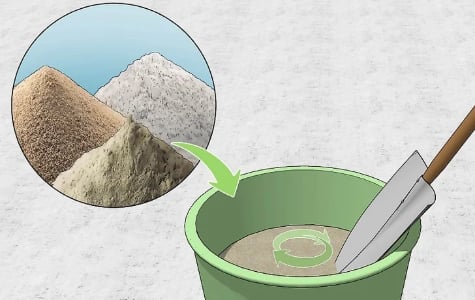
Pour Sand, Gravel and/or Crushed Stone into a Mixing Bucket
STEP 2: Mix the Sand and Gravel
- It’s a good idea to mix the sand and gravel together thoroughly before adding the cement. This ensures the aggregates are evenly combined which helps to create a consistent and uniform mixture, preventing clumps from forming when you add the store brought cement bag.
- While a paddle mixer is recommended for efficiency and better consistency, you can also use a shovel if one is not available.
Top Tip:
Ensure accurate measurements of all ingredients (cement, sand, gravel, and water) to achieve the desired consistency and strength.
STEP 3: Now add the Cement Bag and Mix
Now it’s time to add the cement to your sand and gravel mixture. However, before proceeding, ensure you are wearing protective gloves and a mask for healthy and safety reasons.
- You should add the cement gradually to minimise dust particles in the air that can be damaging to your health.
- It’s advisable to wear a mask and start the cement mixing process outdoors or in a well-ventilated space.
Top Tip:
Follow the recommended mix ratio in Step 1.
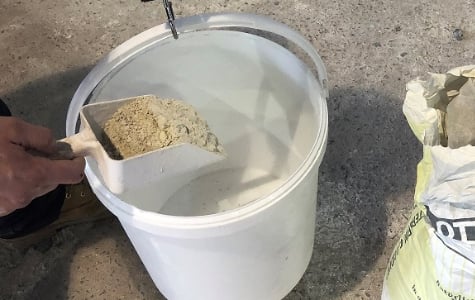
Add the Cement Bag and Mix
Step 4: Add Water
You should now have a three-part mixture (Sand, Gravel and Cement) using the correct mixing ratio, and are now ready to add water. The consistency of your cement mixture will depend on the specific job you’re doing. Generally, the cement mixture should be thick enough to hold its shape but still workable.
- It’s advised to add water slowly, until you achieve your desired consistency.
- A concrete mix should have the consistency of thick pancake batter or dense custard.
Top Tip:
You can check consistency by scooping some of the mix with a trowel. If it holds its shape but can still spread easily, you’re on the right track. However, if it’s too runny, you can add more cement or sand; if it’s too stiff, start to add water slowly.

Add Water & Mix
Step 5: Final Mix
You should now give the concrete one final mix, ensuring a smooth, thick, pancake batter like consistency that holds its shape but still easily spread. You can change up the ratios of aggregates used in the mixture and the amount of water used to ensure a good final consistency.
As a conclusion, after following the above steps, you should now be ready to take on any DIY project that involves the use of concrete.
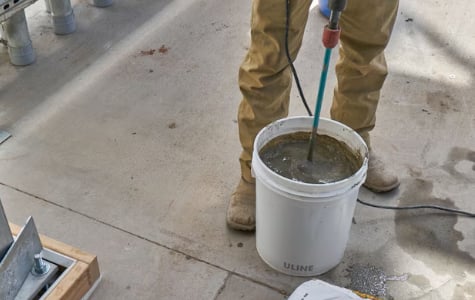
Final Step: Thoroughly Mix
Common Errors to Avoid when Mixing Concrete
Incorrect Mix Ratio:
Its important to ensure you are using the correct proportions of aggregates (cement, sand, gravel) and water as this will impact consistency and therefore the strength of the concrete. For example, too much sand or not enough cement can weaken the mixture, making it less durable overtime.
Rushing the Mixing Process:
Using the incorrect tools or trying to rush the mixing process can result in incorrect inconsistency and lumps. Its important to gradually/slowly add each aggregate and mix thoroughly after each new aggregates is added, ensuring these aggregates are evenly mixed.
Excessive Water Use:
Using too much water can result in a thin mixture, which reduces the strength of the finished product. It might seem easier to work with, but this can lead to cracking and reduced durability over time. You should add water gradually and check consistency, the mix should be wet enough to flow but not runny.
Avoid Using Old or Expired Cement:
Its important to understand that Cement can lose its effectiveness over time, especially if it’s not stored correctly. Using old or improperly stored cement will result in a weak concrete mixture.
Safety Tips for working with Concrete
Personal Protective Equipment (PPE):
When mixing dry cement or cutting concrete, wear a dust mask to avoid inhaling harmful dust particles that can cause damage to your long term health. Its important to know that Concrete can splash onto skin during mixing or use, causing irritation or burns. Wearing long sleeves tops and pants can help to protect your skin, preventing harmful irritations. We recommend wearing heavy-duty, steel-toe capped boots with slip-resistant soles to protect your feet from falling objects or concrete spills.

Personal Protective Equipment
Ensure Effective Ventilation:
Working in an enclosed or poorly ventilated space while mixing concrete can result in the accumulation of harmful fumes. These harmful fumes can be damaging to your health in the future causing numerous health concerns.
Carefully Handle Concrete Mixers and Power Tools:
Always follow the manufacturer’s instructions for all machinery and tools. Keep hands and clothing away from moving parts, and be sure to use the correct settings and speeds.
Work Together:
It’s a good idea to always have a partner or coworker with you when mixing or pouring concrete, especially when using heavy equipment. That way, you’ll have someone there to help if something goes wrong.
Additional Related Articles
How To Mix Cement
Sharp Sand Vs. Building Sand
FAQs (Frequently Asked Questions)
Is ready mix concrete any good?
Yes, ready-mix concrete is a great option for many projects and offers many advantages, but it depends on your specific needs.
Ready-mixed concrete is advantageous as its convenient and saves you time, it further ensures good consistency without having to play around with aggregate ratios.
There are project specific concrete mixes available on the market, designed specifically for certain building or landscaping jobs.
Is making concrete an easy to DIY project?
Making concrete can be a simple DIY project, especially for smaller tasks like garden paths or stepping stones. All you need to do is mix cement, sand, gravel, and water in the right proportions, which is easy enough if you have the right tools on hand.
Follow our guide on How To Make Concrete and follow each step-by-step task carefully for professional results.
Can I use just sand and cement to make concrete?
No, you can’t make proper concrete with just sand and cement. Concrete also needs a coarse aggregate, like gravel or crushed stone, to give it strength and durability.
Without a course aggregate, the mix will be weak, lack structure, and will be more likely to crack overtime.

Whether your patio is in need of a comprehensive clean or you're just aiming to refresh your outdoor space, this Read more

In all garden designs, steps serve more than just a practical purpose; they enhance the visual appeal of your outdoor Read more

Patio slab painting is becoming increasingly popular, with people painting paving slabs for various reasons, in particular, painting patio concrete Read more

Stopping weeds from growing between block paving is important because they can damage the surface and make the area look Read more

